Exodus 4:15
15 Now you shall speak to him and put the words in his mouth. And I will be with your mouth and with his mouth, and I will teach you what you shall do.
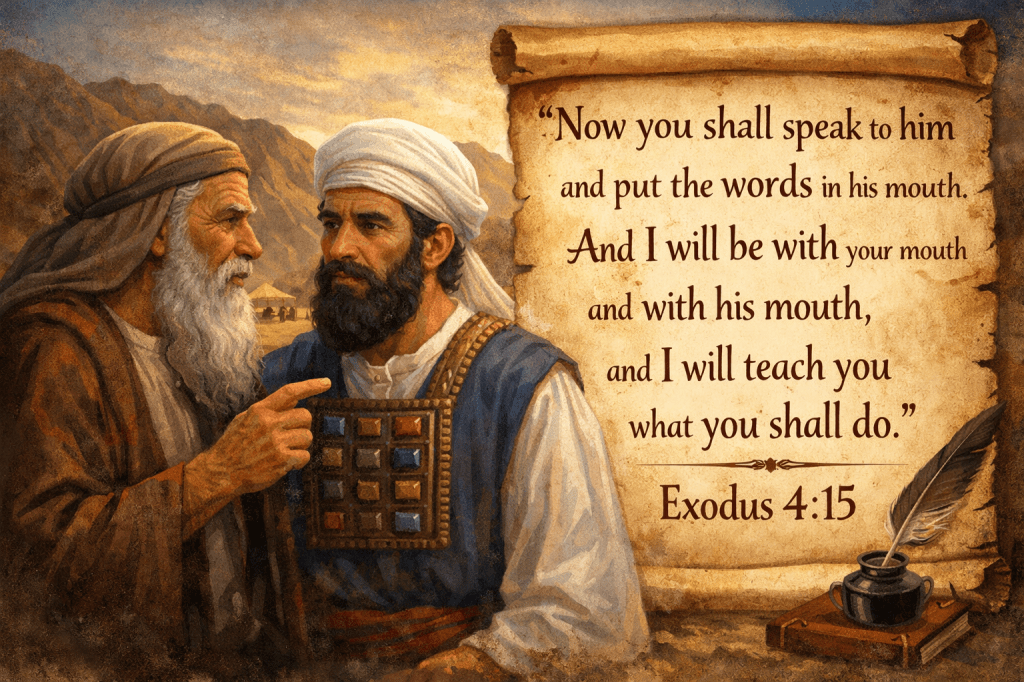
The Role and Importance of a Spokesperson
- A spokesperson represents another person or organization with authority and responsibility.
- They serve as the public voice, ensuring the message is communicated accurately and effectively.
- A spokesperson connects the message to people in a relatable and trustworthy way.
Key Functions of a Spokesperson
- Humanizes the Message: Transforms an abstract entity into a relatable voice, building connection and understanding.
- Controls the Narrative: Ensures the message is accurate, especially in difficult or crisis situations.
- Builds Credibility and Trust: Authority, honesty, and composure establish confidence in the message.
- Ensures Consistency: Delivers a unified message across all platforms and audiences.
- Manages Difficult Situations: Responds calmly to challenging questions and sensitive moments.
- Acts as a Liaison: Serves as the primary point of communication between the sender and the audience.
- Reinforces Identity and Purpose: Clearly communicates vision, values, and mission.
Moses: God’s Chosen Spokesperson
- In the passage referenced, God rebukes Moses for resisting His calling.
- Moses attempted to excuse himself by claiming he was slow of speech and slow of tongue.
- He believed his lack of eloquence disqualified him from speaking on God’s behalf.
- After forty years in the wilderness, Moses may have felt disconnected from the refined language and training he once had in Egypt.
A Common Struggle Among Believers
- Many Christians today mirror Moses’ hesitation.
- Common excuses include:
- “I’m not eloquent.”
- “I don’t know enough Bible verses.”
- “I’m shy.”
- “What will people think if I speak about Scripture?”
- These fears often prevent believers from witnessing and obeying God’s call.
God’s Response to Moses
- Exodus 4:15:
“Now you shall speak to him and put the words in his mouth. And I will be with your mouth and with his mouth, and I will teach you what you shall do.” - God did not remove the assignment—He supplied the ability.
- God promised His presence with the mouth of Moses and the mouth of Aaron.
God’s Covenant with the Mouth
- Every person God chooses, He also appoints as His spokesperson.
- God’s covenant in this passage is specifically connected to speech.
- The words Moses and Aaron spoke were not self-generated but God-supplied.
- Their spoken words were required to align exactly with God’s Word.
Understanding Covenant (Biblical Meaning)
- A covenant is a binding agreement or legal contract.
- It implies obedience without alteration:
- If God says go left, you go left.
- If God says go right, you go right.
- In Exodus 4:15, the covenant meant God governed the speech of Moses and Aaron.
The Nature of Spoken Words
- Spoken words are formed through:
- Phonemes (basic sound units)
- Syllables and words
- Meaning (semantics)
- Structure (syntax)
- Delivery (prosody: pitch, rhythm, volume)
- God is sovereign even over how words are spoken, not just what is spoken.
Scripture and the Covenant of Words
- The writers of the 66 books of the Bible recorded God’s words exactly as given to them by the Holy Spirit.
- They understood the covenantal responsibility to speak and write faithfully.
- God’s Word was not altered to fit human preference or ability.
Application for New Covenant Believers
- As New Covenant believers, we are under the same obligation to speak God’s truth faithfully.
- God does not exempt anyone based on eloquence or confidence.
- If God calls, He supplies the words.
- Obedience, not eloquence, is the requirement.
- Every believer is bound by this covenant to represent God accurately to the world.
Maranatha! Come Lord Jesus!
 BIBLE FACTS OF THE DAY
Leave a comment