JOHN4:36
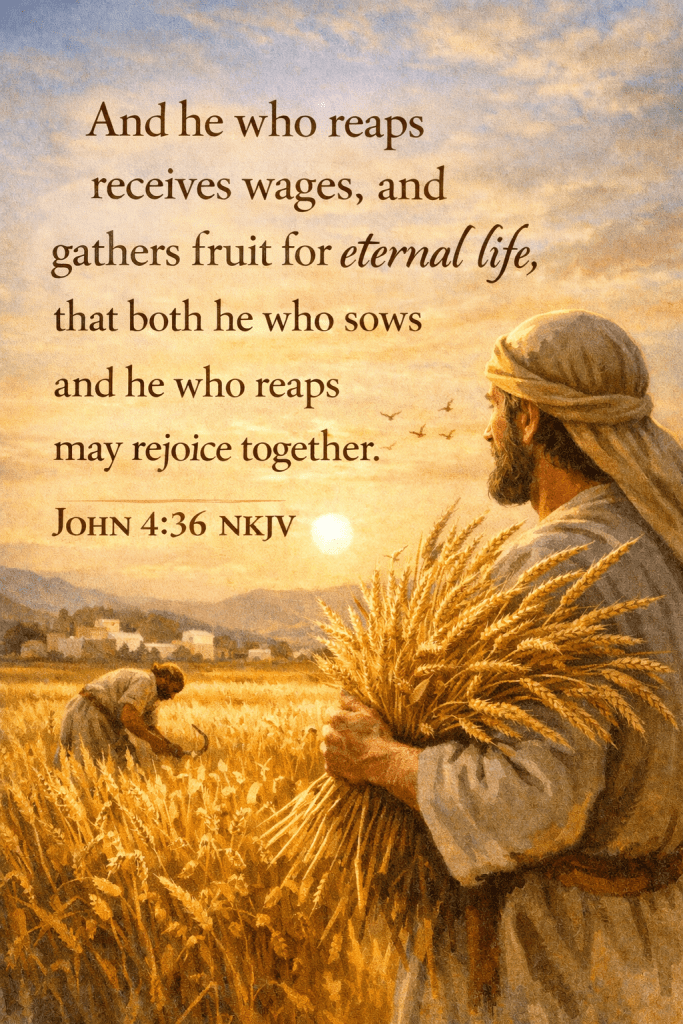
36 And he who reaps receives wages, and gathers fruit for eternal life, that both he who sows and he who reaps may rejoice together.
Introduction: The Setting of the Verse
John 4 records Jesus’ conversation with the Samaritan woman at the well. While the disciples are focused on physical food, Jesus speaks of spiritual nourishment and God’s greater work. This verse comes as Jesus lifts their eyes to the mission of God—a mission already unfolding before them.
The woman has gone back into the town, and a harvest of souls is on the way. Jesus uses agricultural imagery to teach how God works through people, often across generations, to bring eternal fruit.
I. God’s Work Involves Both Sowing and Reaping
“He who sows… he who reaps…”
1. Sowing and reaping are different roles
Not everyone does the same work in God’s kingdom.
- Some plant seeds (teaching, witnessing, praying).
- Some water those seeds (encouragement, discipleship).
- Some reap the visible results (conversion, growth).
The danger is comparing roles instead of celebrating purpose.
“I planted, Apollos watered, but God gave the increase.” (1 Corinthians 3:6)
2. Faithfulness matters more than visibility
God does not measure success by immediate results, but by obedience.
Many faithful believers sow their entire lives and never see the harvest—but heaven records every seed.
II. The Reaper Receives Wages from God
“He who reaps receives wages…”
1. God is a just rewarder
This is not salvation by works, but reward for faithfulness.
God sees every act done in His name—no effort is wasted.
“Your labor is not in vain in the Lord.” (1 Corinthians 15:58)
2. The reward is eternal, not temporary
Jesus shifts the focus from earthly gain to heavenly reward.
The greatest reward is not applause, recognition, or numbers—it is eternal significance.
III. The Fruit Is Eternal Life
“…and gathers fruit for eternal life…”
1. Souls are the harvest
The fruit Jesus speaks of is people coming to eternal life.
This gives weight and urgency to evangelism.
Buildings decay. Programs end.
Souls last forever.
2. Eternal fruit outlives the worker
The Samaritan woman becomes a witness.
The town comes to Jesus.
Long after the sower and reaper are gone, the fruit remains.
IV. God’s Goal Is Shared Joy
“…that both he who sows and he who reaps may rejoice together.”
1. No competition in the Kingdom
Jesus eliminates pride and jealousy.
There is one harvest, one Lord, one joy.
In heaven, the sower rejoices when the reaper gathers fruit.
The reaper rejoices knowing the harvest came from seeds planted long before.
2. Joy comes from obedience, not ownership
We do not own the harvest—God does.
Our joy comes from being part of His work.
“There is joy in the presence of the angels of God over one sinner who repents.” (Luke 15:10)
V. Application: What Does This Mean for Us Today?
1. Be faithful where God has placed you
You may be sowing in a hard field.
You may be reaping what others planted.
Either way—be faithful.
2. Stop measuring success by immediate results
Some prayers are answered years later.
Some seeds grow underground before they ever break the surface.
3. Rejoice in every soul saved—whether you were involved or not
A gospel-centered heart celebrates all kingdom progress.
Conclusion: Lift Your Eyes
Just before this verse, Jesus says:
“Lift up your eyes and look at the fields, for they are already white for harvest!” (John 4:35)
The harvest is God’s.
The work is shared.
The reward is eternal.
And the joy is together.
Will you sow faithfully?
Will you reap humbly?
Will you rejoice eternally?
Maranatha! Come Lord Jesus!
 BIBLE FACTS OF THE DAY
Leave a comment