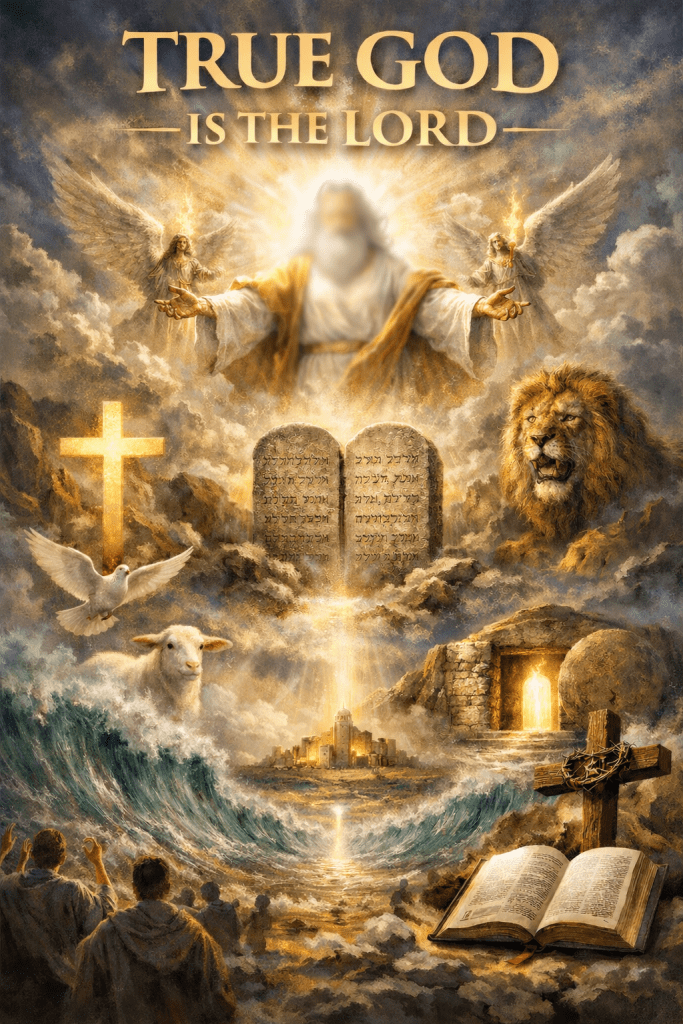
In a world filled with many religions and countless “gods,” how does a person choose the one and only true God?
When we examine the major religions of the world, each provides a defined path of entry. Yet each path centers primarily on human effort, human commitment, and human works. Consider the following:
1. Islam
To become a Muslim, a person must sincerely recite the Shahada, the declaration of faith:
“There is no god but Allah, and Muhammad is the Messenger of Allah.”
This confession signifies belief in one God and His final prophet. The convert then commits to practicing the Five Pillars of Islam—prayer, fasting, charity, and other religious duties. Often this is accompanied by ritual purification and guidance from a mosque to learn the fundamentals of the faith.
2. Hinduism
Becoming a Hindu generally involves embracing its philosophy through study, practice, and lifestyle changes. Followers seek to live according to core principles such as Dharma (righteous living), Karma, and reincarnation. Entry may include devotion, meditation, or formal initiation with a guru, but many simply adopt Hindu ethics such as Ahimsa (non-violence) and Satyam (truth) as a way of life.
3. Judaism
Conversion to Judaism is typically a long and rigorous process, often lasting one to three years. It includes extensive study of Jewish theology, history, and traditions, active participation in community life, and guidance from a sponsoring rabbi. The candidate must appear before a rabbinical court and complete ritual requirements such as immersion in a ceremonial bath, and for men, circumcision.
4. Sikhism
Sikhism teaches belief in one God, the ten Gurus, and the Guru Granth Sahib. A person embraces the faith by living according to principles such as honesty, service, and compassion. While anyone may begin practicing these teachings, initiated Sikhs formally commit through a ceremony and adopt the Khalsa code, including wearing the Five Ks.
5. Catholicism
Becoming Catholic involves a structured journey called the Order of Christian Initiation for Adults (OCIA). This process includes attending Mass, studying church teachings, and spiritual formation, often lasting about a year. It culminates in receiving the Sacraments of Initiation—Baptism, Confirmation, and Holy Eucharist.
A Common Thread
When we examine these paths, a clear pattern emerges:
- Study
- Rituals
- Personal discipline
- Religious duties
- Moral effort
- Human performance
In each case, acceptance appears to depend largely on what the person does to enter or maintain favor within the religion.
For example, in Hindu worship, offerings of food, flowers, or water are presented before idols. Yet those idols cannot hear, speak, or respond. The worshiper offers these gifts without any assurance that they are received. The practice continues simply because it has been passed down through tradition.
This raises a profound question:
If every system depends on human effort, can human effort truly reach God?
Maranatha! Come Lord Jesus!
 BIBLE FACTS OF THE DAY
Leave a comment