Introduction
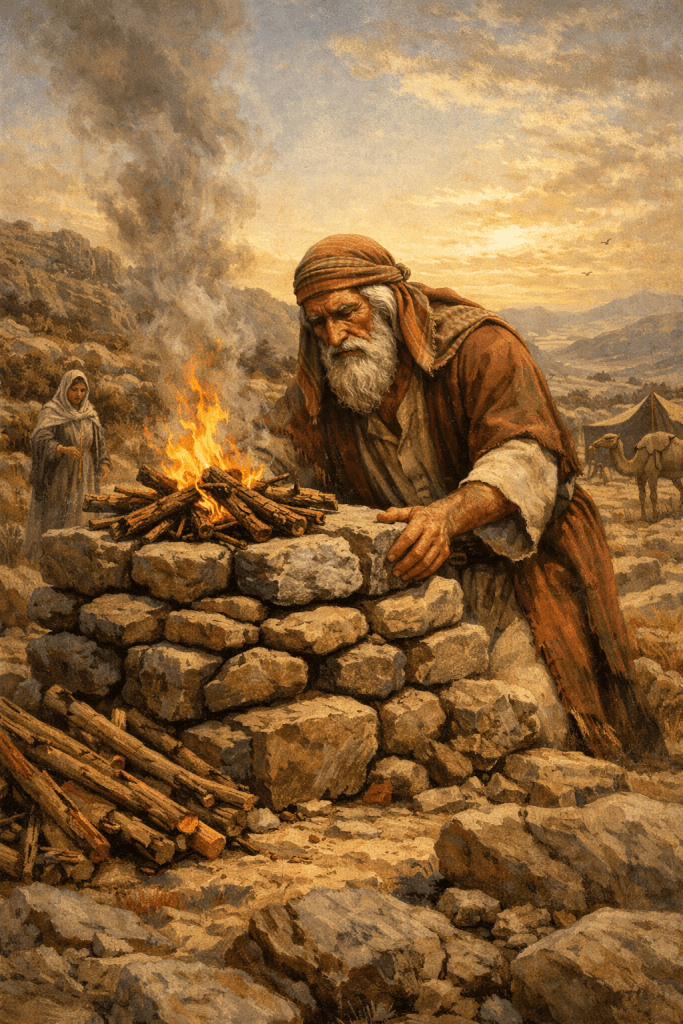
When you trace the life of Abraham through Scripture, you don’t just see a man—you see a pattern. Wherever he went, he built altars. These altars were not just piles of stones; they were moments of encounter, surrender, and worship.
Abraham built five altars recorded in the Book of Genesis. Each altar represents a stage in his walk with God.
1. The Altar of Calling (Shechem) — Genesis 12:6–7
“Then the Lord appeared to Abram and said, ‘To your descendants I will give this land.’ And there he built an altar to the Lord…”
This is the first altar Abraham builds.
- God appears to him for the first time in the land
- Abraham responds with worship
When God calls you, the first response should be worship—not questions.
Application:
Have you built an altar where God first spoke to you?
2. The Altar of Separation (Between Bethel and Ai) — Genesis 12:8
“And there he built an altar to the Lord and called on the name of the Lord.”
This altar is built after Abraham moves forward in obedience.
- Positioned between Bethel (“house of God”) and Ai (“heap of ruins”)
- A symbolic place: choosing God over the world
Every believer must choose—God over the ruins. Choosing God over the ruins means surrendering personal control when life collapses, trusting that divine strength can rebuild from despair.
Application:
You cannot walk with God and cling to the world at the same time.
3. The Altar of Return (Back to Bethel) — Genesis 13:3–4
“To the place of the altar which he had made there at first. And there Abram called on the name of the Lord.”
After going down to Egypt (a spiritual detour), Abraham returns.
- He goes back to the altar he had built before
- Restoration begins at the altar
Failure is not the end—returning to God is the key.
Application:
If you’ve drifted, go back to your altar.
4. The Altar of Fellowship (Hebron) — Genesis 13:18
“Then Abram moved his tent… and built an altar there to the Lord.”
This altar is built after Abraham separates from Lot.
- A place of deeper communion with God
- No striving, no conflict—just fellowship
Separation from strife often leads to deeper intimacy with God.
Application:
Peace with God often requires separation from what hinders.
5. The Altar of Sacrifice (Mount Moriah) — Genesis 22:9
“And they came to the place… and Abraham built an altar there…”
This is the most powerful altar.
- Abraham is willing to offer Isaac
- Represents total surrender
True worship costs everything.
Application:
Is there anything you are withholding from God?
Summary: The Five Altars of Abraham
- Shechem – The altar of calling
- Bethel (first) – The altar of separation
- Bethel (return) – The altar of restoration
- Hebron – The altar of fellowship
- Moriah – The altar of sacrifice
Key Truth
Abraham didn’t just believe in God—he walked with God, and every altar marked a deeper level of faith.
Prophetic Application
God is still looking for people who build altars:
- Altars of prayer
- Altars of surrender
- Altars of worship
Not physical stones—but hearts laid before Him.
Closing Exhortation
Where is your altar?
- Have you responded to God’s call?
- Have you returned after failure?
- Have you surrendered what is most precious?
Because a life without altars is a life without encounters.
Closing Prayer
Lord God of Abraham, Isaac, and Jacob,
Teach us to build altars in our lives—not of stone, but of surrender.
Call us back when we wander, and give us the faith to lay everything before You.
May our lives be living altars, holy and acceptable to You.
In Jesus’ name, Amen.
Maranatha! Come Lord Jesus!
 BIBLE FACTS OF THE DAY
Leave a comment