PART I
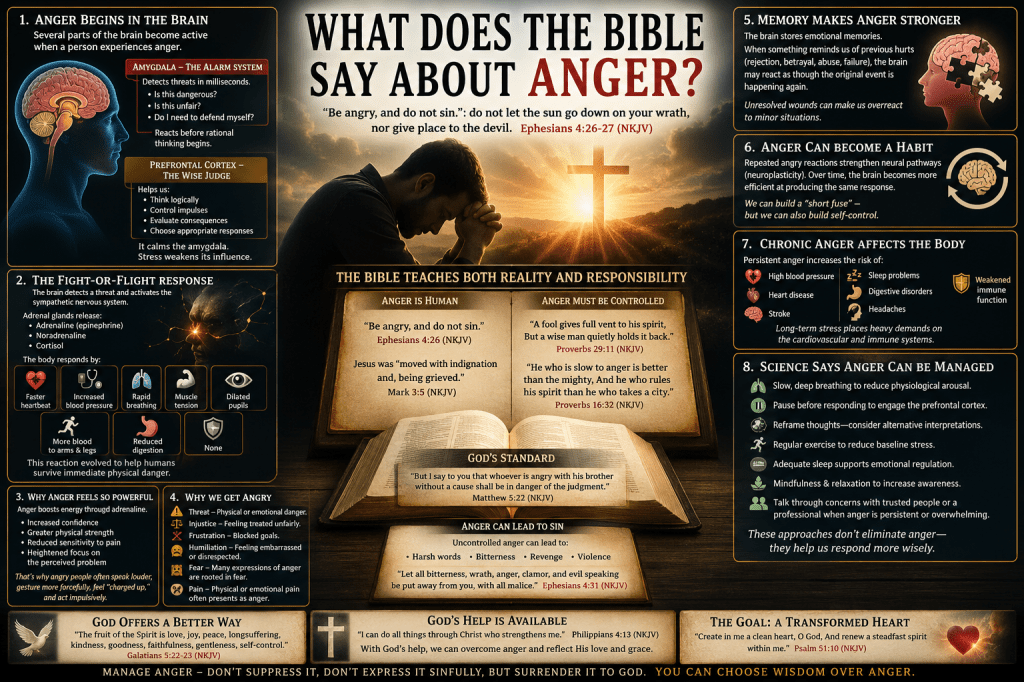
1. Anger Begins in the Brain
Several parts of the brain become active when a person experiences anger.
The Amygdala – The Alarm System
The amygdala is responsible for detecting threats.
When someone insults you, betrays you, or places you in danger, the amygdala quickly asks:
- Is this dangerous?
- Is this unfair?
- Do I need to defend myself?
The amygdala reacts in milliseconds—often before rational thinking begins.
This explains why people sometimes “explode” before thinking.
The Prefrontal Cortex – The Wise Judge
The prefrontal cortex, located behind the forehead, helps us:
- Think logically
- Control impulses
- Evaluate consequences
- Choose appropriate responses
Healthy emotional regulation occurs when the prefrontal cortex calms the amygdala.
When someone is extremely angry, stress can reduce the prefrontal cortex’s influence, making thoughtful decisions more difficult.
2. The Fight-or-Flight Response
Once the brain detects a threat, it activates the sympathetic nervous system.
The adrenal glands release:
- Adrenaline (epinephrine)
- Noradrenaline
- Cortisol
These chemicals prepare the body for action.
The body responds by:
- Faster heartbeat
- Increased blood pressure
- Rapid breathing
- Muscle tension
- Dilated pupils
- Increased blood flow to the arms and legs
- Reduced digestion
This reaction evolved to help humans survive immediate physical danger.
3. Why Anger Feels So Powerful
Anger temporarily boosts energy.
The surge of adrenaline creates:
- Increased confidence
- Greater physical strength
- Reduced sensitivity to pain
- Heightened focus on the perceived problem
This is why angry people often:
- Speak louder
- Gesture more forcefully
- Feel “charged up”
- Act impulsively
4. Why We Get Angry
Psychologists identify several common triggers.
Threat
Physical or emotional danger.
Injustice
Feeling treated unfairly.
Frustration
Blocked goals.
Humiliation
Feeling embarrassed or disrespected.
Fear
Many expressions of anger are rooted in fear.
Pain
Physical or emotional pain often presents as anger.
5. Memory Makes Anger Stronger
The brain stores emotional memories.
When something reminds us of previous hurts:
- rejection
- betrayal
- abuse
- failure
the brain may react as though the original event is happening again.
This is why unresolved emotional wounds can make people react strongly to relatively minor situations.
6. Anger Can Become a Habit
Repeated angry reactions strengthen neural pathways through a process known as neuroplasticity.
Over time, the brain becomes more efficient at producing the same response.
This means people can develop a “short fuse.”
The encouraging news is that healthier patterns can also be strengthened through intentional practice, emotional regulation, and supportive habits.
7. Chronic Anger Affects the Body
Persistent anger has been linked with increased risk of:
- High blood pressure
- Heart disease
- Stroke
- Sleep problems
- Digestive disorders
- Headaches
- Weakened immune function
Long-term stress responses place ongoing demands on the cardiovascular and immune systems.
8. Science Says Anger Can Be Managed
Research supports several evidence-based strategies for regulating anger:
- Slow, deep breathing to reduce physiological arousal.
- Pausing before responding to allow the prefrontal cortex to engage.
- Reframing thoughts by considering alternative interpretations.
- Regular exercise to reduce baseline stress.
- Adequate sleep, which supports emotional regulation.
- Mindfulness and relaxation techniques to improve awareness of emotional responses.
- Talking through concerns with trusted people or a mental health professional when anger is persistent or overwhelming.
These approaches do not eliminate anger but help people respond more thoughtfully.
But what does the Bible say about anger?
Maranatha! Come Lord Jesus!


Leave a comment