Exodus 3:5
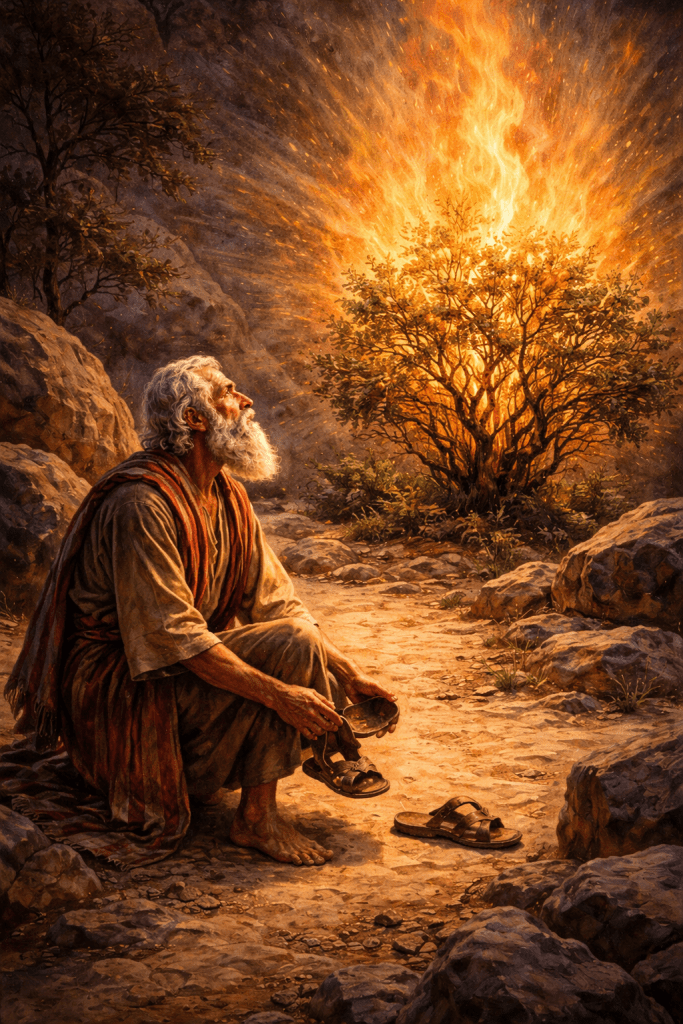
5 Then He said, “Do not draw near this place. Take your sandals off your feet, for the place where you stand is holy ground.”
Introduction
Exodus 3 records one of the most pivotal moments in all of Scripture. Moses is eighty years old, living in obscurity, tending sheep on the backside of the desert. Forty years earlier, he had tried to deliver Israel in his own strength and failed. Now he is forgotten by Egypt, distant from Israel, and seemingly finished.
Then God interrupts the ordinary. A bush burns but is not consumed. Moses turns aside, and God speaks. The first command God gives Moses is not, “Go to Pharaoh,” or “Set my people free,” but “Take off your sandals, for the place where you stand is holy ground.”
Before God gives Moses a mission, He gives him a revelation. Before He sends Moses out, He calls Moses in. And before Moses can stand before Pharaoh, he must first bow before God.
This moment teaches us enduring truths about how sinful people encounter a holy God.
I. God Confronts Moses With His Holiness (Exodus 3:5)
“Do not come near,” God said. “Take your sandals off your feet, for the place where you are standing is holy ground.”
1. Holiness Is God’s Nature, Not the Ground’s Property
The ground was ordinary desert sand until God manifested His presence. Holiness does not come from location; it comes from God. Wherever God reveals Himself, that place becomes holy.
This teaches us that holiness is not something we control or define. God alone determines what is holy because God Himself is holy.
Moses did not make the ground holy by his curiosity. The bush did not make the ground holy by its fire. God made it holy by His presence.
2. God Sets the Terms of Approach
God says, “Do not come near.” Moses is curious, but curiosity alone does not grant access to God. God must invite us closer on His terms.
Removing sandals was a cultural sign of reverence and submission. Moses is being taught that God is not casual, common, or approachable on human terms. He is not Moses’ equal. He is the Holy One.
In a world that often treats God casually, this passage reminds us that God is near, but He is never ordinary.
3. Awareness of Holiness Produces Reverence
The command to remove sandals slows Moses down. It forces him to stop, reflect, and recognize where he is.
True encounters with God do not begin with activity; they begin with reverence.
II. Removing Sandals Symbolizes Humility and Surrender
Sandals represent protection, self-direction, and personal control. Removing them is an act of vulnerability.
1. Moses Stands Exposed Before God
With sandals removed, Moses stands barefoot on the ground. There is no barrier between him and the holy place where God has chosen to meet him.
This is a picture of humility. Moses brings nothing impressive to this encounter—no authority, no résumé, no strength. Only obedience.
God often removes what we rely on before He reveals what He will provide.
2. God Requires Surrender Before Service
Notice the order. God does not first tell Moses what to do. He first tells Moses what to remove.
Before God uses Moses’ mouth, He claims Moses’ posture. Before Moses can speak for God, he must submit to God.
This teaches us that obedience is more important than ability. God is not impressed by competence that lacks surrender.
3. God Breaks Moses’ Self-Reliance
Forty years earlier, Moses thought he was ready to deliver Israel. Now he has learned that he is not sufficient.
Removing sandals is a quiet but powerful way of saying, “You are not in charge here. I am.”
God often prepares us for greater responsibility by first teaching us greater dependence.
III. Holy Ground Marks a Turning Point in Moses’ Life
This moment is not merely symbolic—it is transformational.
1. Moses the Shepherd Becomes Moses the Servant
Moses arrives as a shepherd tending sheep. He leaves commissioned as the deliverer of Israel.
Holy ground is often the place where God redefines our identity.
God does not speak to Moses about his past failure. He speaks to Moses about His eternal purpose.
2. God Reveals Himself Before Revealing the Mission
In verses 6–12, God identifies Himself as the God of Abraham, Isaac, and Jacob. Only after revealing who He is does God explain what He will do.
God wants Moses to know who is sending him before he knows where he is going.
The power of Moses’ mission will not come from Moses’ strength but from God’s presence.
3. Fear Is the Right Response to God’s Glory
Scripture says Moses hid his face, for he was afraid to look at God.
This is not terror that drives him away but reverence that draws him deeper. Biblical fear is not fear of punishment; it is awe in the presence of majesty.
Where God is rightly feared, obedience naturally follows.
IV. The Greater Meaning for God’s People Today
This moment is not just about Moses. It speaks to every believer.
1. God Still Calls His People to Holy Reverence
Though we approach God through Christ with confidence, we never approach Him casually. Grace does not cancel holiness; it makes holiness accessible.
We do not remove literal sandals today, but God still calls us to remove anything that dulls our reverence—pride, distraction, self-reliance, and unrepentant sin.
2. Christ Makes Holy Ground Possible
Through Jesus Christ, God dwells not in burning bushes but in redeemed people. Wherever God’s Spirit dwells, holy ground exists.
Yet access through Christ does not eliminate the need for humility. The cross is the ultimate reminder that God is both near and holy.
3. Every Call Begins With Worship
Before God sends us into the world, He draws us into His presence. Before we speak for Him, we must kneel before Him.
The greatest danger in ministry is not opposition—it is familiarity without reverence.
Conclusion
God asked Moses to remove his sandals because Moses was standing on holy ground. But more than that, God was preparing Moses to stand in holy purpose.
That command teaches us that:
- God is holy and must be approached with reverence
- God calls for surrender before service
- God transforms ordinary moments into holy encounters
- God reveals Himself before He reveals His mission
Every genuine calling begins with worship. Every encounter with God begins with humility. And every servant God uses greatly first learns to stand barefoot before Him.
Before God sends us out, He calls us to bow low.
“Take off your sandals, for the place where you stand is holy ground.”
Redemption demands decision.
Maranatha! Come Lord Jesus!
 BIBLE FACTS OF THE DAY
Leave a comment